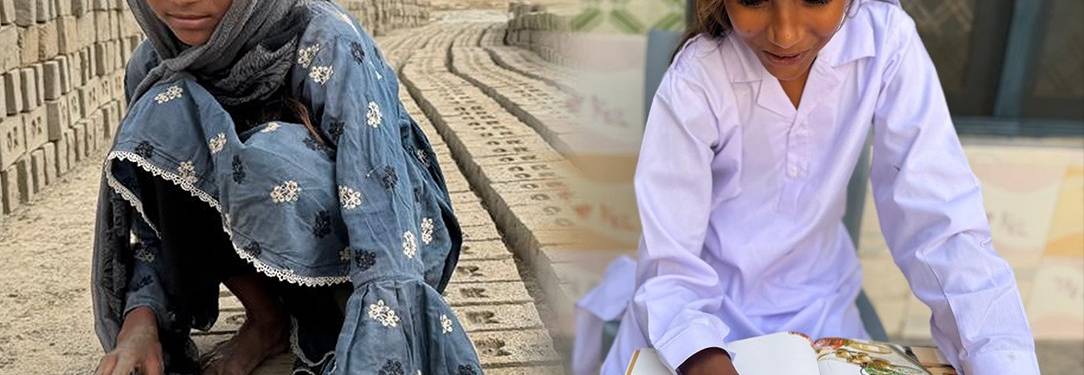
For three decades, Faqir Masih and his wife Rasoolan Bibi lived in bonded labour, toiling at a brick kiln in the city of Kot Radha Kishan in Pakistan’s Punjab province.
The Christian couple and their four children endured exhausting work, poverty and an unsafe home, which had no proper door or lock.
“I used to stay awake all night holding my daughters out of terror because of our doorless shack,” said Rasoolan.
The family’s suffering deepened this year when their eldest daughter, Neha Faqir, was abducted.
On 24 March, Neha left home to go to her new sewing apprenticeship, but she never came back from work.
The family reported her missing to the police, but they later found out Neha had been taken to a madrassa in Lahore and registered as a Muslim on 26 March.
On 9 June, the Lahore High Court dismissed a petition from Neha’s parents to have her freed from the madrassa and returned to them.
They asked to be allowed to speak with Neha alone for 10 minutes, but the judge refused.
Christian Solidarity International (CSI) took up Neha’s case in its advocacy work with the campaign, ‘Pakistan: Bring Neha Home!’
On 25 June, CSI International President Dr. John Eibner wrote to Pakistan’s ambassador to the United States, requesting an investigation into the case and that Neha be provided the opportunity to express her will, and renounce Islam if she so chooses, in a neutral and protected setting.
In parallel, CSI began working to address the needs of Neha’s family, namely housing, livelihoods, education and medical care.
The first step was to pay off the family’s outstanding debts, enabling them to leave bonded labour.
From slavery to freedom
At 63, the family patriarch Faqir carries the physical effects of decades of heavy labour.
He confided to CSI that he had thought he would die a slave in Pakistan’s brick kilns.
Leaving the kiln means he can finally rest without facing the daily demands of making bricks.
CSI has arranged medical attention for his chronic pain.
He was deeply moved and with his eyes shining with tears of gratitude as he shared that for thirty years, his body felt like it was trapped in stone.
“When CSI paid off our debt and handed me the keys to our freedom, I felt like a young man again,” he said.
“Finally resting, healing, and watching my children smile without fear. God truly heard our cries.”
To help the family support itself and reduce the risk of returning to debt bondage, CSI provided an auto rickshaw for their 21-year-old son, Badal.
He can now earn an income through transport work and help support his parents.
Their 20-year-old daughter, Saneha, is living in a CSI-supported training centre, where she receives vocational education.
This provides her with a secure place to learn and prepare for greater independence.