GENEVA – Christian Solidarity International took to the floor of the UN Human Rights Council last week to warn that the survival of indigenous Christians in West Papua is threatened by the Indonesian government’s military operations and development projects.
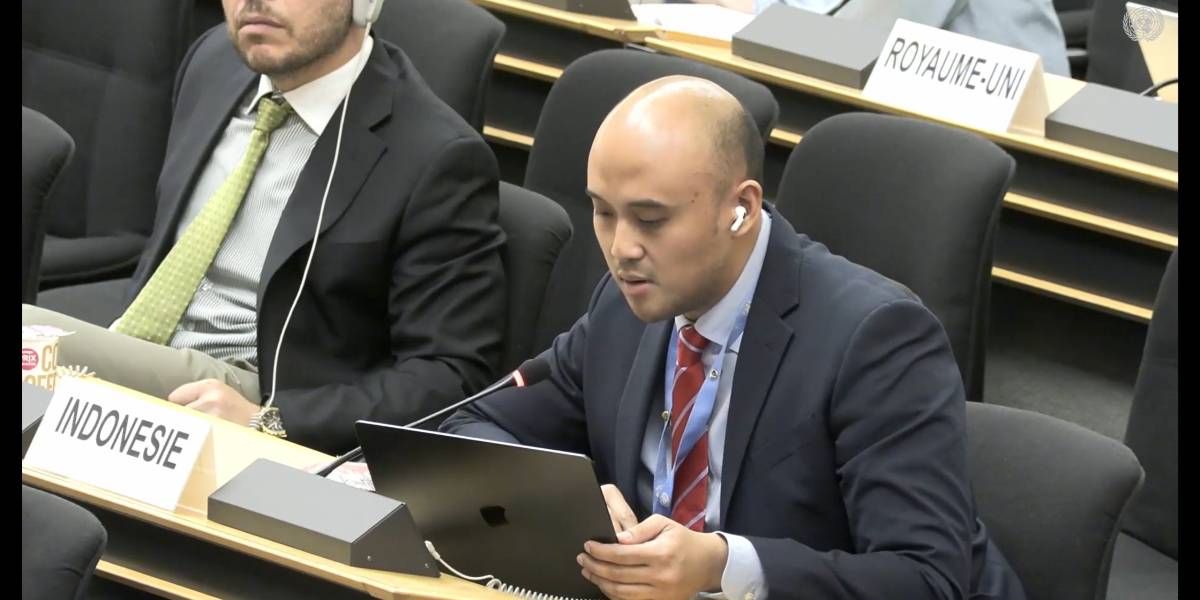
In response, the Indonesian delegation to the Human Rights Council blamed violence in the region on Papuan rebels, and continued to stonewall on the possibility of admitting international observers to the region.
“As of September, the number of internally displaced people in the six provinces of West Papua has increased to 127,000, up from 105,000 six months ago,” CSI’s director for public advocacy, Joel Veldkamp, told the Human Rights Council in a debate on October 1. “CSI’s partners on the ground continue to report new arrivals of displaced people in coastal areas.”
Veldkamp said that Indonesian military operations in West Papua were fueling the displacement. These operations, he said, are meant to “protect large-scale mining and farming projects that are driving indigenous Papuans from their lands.”
Veldkamp named Elianus Agimbau, a 20-year-old evangelist who was shot to death in Central Papua province on 29 June, as one of the people killed by Indonesian security forces in recent months.
Video: Indonesia responds to CSI at UN Human Rights Council
West Papua: Occupation and Exploitation
West Papua, the western half of the island of New Guinea, has been ruled by Indonesia since 1962. It is largely covered in virgin rainforests and boasts vast natural resources, including gold, nickel, copper, and valuable farming land.
While Indonesia is the world’s largest Muslim-majority country, the indigenous peoples of West Papua are almost entirely Christian.
In 1962, Indonesia invaded and occupied West Papua, crushing a local independence movement. A series of Indonesian governments have kept the region under military occupation, and have settled hundreds of thousands of non-Papuan Indonesians there in a bid to subjugate it.
Some Papuans responded with armed resistance; others have confronted the occupation with peaceful organising. The conflict continues until today.
Christian Solidarity International works with local partners in West Papua to help people displaced by government military operations, and to strengthen efforts by local churches to advocate for their people and their rights.
In recent years, Indonesia has launched a series of major mining and plantation-building projects in West Papua, the “National Strategic Projects.” The industrial plantations in Merauke in the Southern Papua province alone cover an astonishing 2.5 million hectares of land. These projects are dispossessing the indigenous Papuan people of their lands on a massive scale and causing widespread ecological damage.
Call for Indonesia to let in outside observers
All of this is taking place in a region that the Indonesian government has largely closed to independent observers, foreign journalists, and international human rights bodies.
In his statement at the Human Rights Council, Veldkamp reiterated the call from the Papuan Customary Council, which includes the Papua Council of Churches, for the Indonesian government to “halt all National Strategic Projects in the seven customary regions of Papua,” to carry out independent investigations into serious human rights abuses, and to take concrete steps towards an end to military operations in West Papua.
During the 81st UN General Assembly in September, a group of Pacific countries called on the Indonesian government to facilitate a visit to the region by the UN High Commissioner for Human Rights. CSI echoed this call in its statement to the Human Rights Council.
Indonesia Responds
After CSI’s statement, the Indonesian delegation exercised its right of reply to respond to CSI’s “allegation.”
Ambassador Nur Rakhman Setyoko took the floor to blame the displacement of Papuans on the “brutality” of Papuan rebels, who “terrorise civilians, urging them to flee”. “Indonesia remains committed to protecting all of its citizens in Papua”, he said.
Fighting between Papuan rebels and the Indonesian military has escalated in the last six months, and both sides have killed civilians. The watchdog Human Rights Monitor documented 24 extrajudicial killings by Indonesian security forces in April-June 2026 alone. In one incident, an Indonesian military drone dropped a grenade on a Catholic church immediately after a worship service, wounding five people.
In response to CSI’s call for Indonesia to invite the UN High Commissioner for Human Rights to visit West Papua, Ambassador Setyoko gave an elliptical response: “We underline that any arrangement of such a visit should be under agreement between the host state and the office of the high commissioner”, he said. “It is not determined by a third state, nor by any other body”.
“CSI is gravely concerned by the extrajudicial killing of civilians both by Indonesian security forces and Papuan guerilla groups”, Veldkamp commented. “When the Indonesian government is using drones to drop grenades on churches during worship, its claim that it is ‘committed to protecting all of its citizens in Papua’ are difficult to credit”.
“Indonesia should investigate these atrocities, and heed the call by the Papuan Council of Churches and take steps to reach a ceasefire as soon as possible”, Veldkamp concluded. “We also urge Indonesia to, as Ambassador Setyoko suggests, reach an agreement with the High Commissioner’s office for an official visit to West Papua. The conflict in West Papua must come out of the darkness”.