It was my first journey to Sudan, and one I will never forget.
In mid-February, I had the opportunity to travel to the Nuba Mountains in Sudan to support the projects that Christian Solidarity International is implementing in the region. A particular focus was on the distribution of humanitarian aid to internally displaced persons (IDPs) who have been forced to flee their homes due to the ongoing conflict.
We began by flying from South Sudan to Yida in the north of South Sudan, a place that at first glance seems like nothing more than a dusty airstrip. And yet, over time, it has grown into something much more. Thousands of people fleeing the war in Sudan have settled here, building a fragile but functioning community. There are small markets, restaurants, even schools, signs of resilience in the midst of extreme hardship.
From there, we continued our journey to the Nuba Mountains in Sudan. The seven-hour drive took us over rough, dusty tracks, which could hardly be called roads. During the rainy season, these paths become nearly impassable.
Tension underlies the calm
Along the way, we were stopped at multiple checkpoints, as the region is controlled by the SPLM-N (Sudan People’s Liberation Movement-North). Access is restricted, and movement is monitored.
What stayed with me the most was the constant awareness that the front line was not far away. In today’s warfare, distance offers little protection. Drones can strike without warning, and Sudan is no exception.
Even when everything seems calm, there is an underlying tension – a quiet, persistent sense of vulnerability. Fear is a constant for everyone living and passing by here.
The conflict in Sudan began in April 2023 as a power struggle between the Sudanese Armed Forces (SAF) and the paramilitary Rapid Support Forces (RSF). A political dispute over control of the country quickly escalated into a nationwide war, with particularly intense fighting in the capital, Khartoum, and in the Darfur region.
The violence has caused widespread destruction, displaced millions of people, and triggered a severe humanitarian crisis. The economy and basic services have largely collapsed, and large parts of the population are facing hunger. International mediation efforts have so far failed, and the conflict continues, with conditions for civilians steadily worsening.
Isolation from the world
At the same time, there was another realisation, one that felt even heavier: while we – NGO workers – could leave at any moment and return to safety, the people living here cannot. They remain, bound to circumstances beyond their control. This awareness of privilege, and of powerlessness is deeply unsettling.
Another striking experience was the absence of internet connection. In the Nuba Mountains, there is virtually no internet. For those of us used to being constantly connected, able to speak to family and friends at any time, this felt highly disorienting.
It reveals how much we depend on technology to be able to seek the comfort and support of loved ones when we are away. And how different daily life is for those who live here permanently – without being able to rely on anyone.
Isolated from the world. Forgotten. Alone.
Profound hunger crisis
The local communities themselves live in extreme poverty, often surviving on subsistence farming, facing months of hunger and uncertainty. And still, they share what little they have.
In the Nuba Mountains, around two million displaced people from all over the country are spread across numerous camps, with almost no international support. Much of the burden is carried by local structures, doing their best with very limited resources.
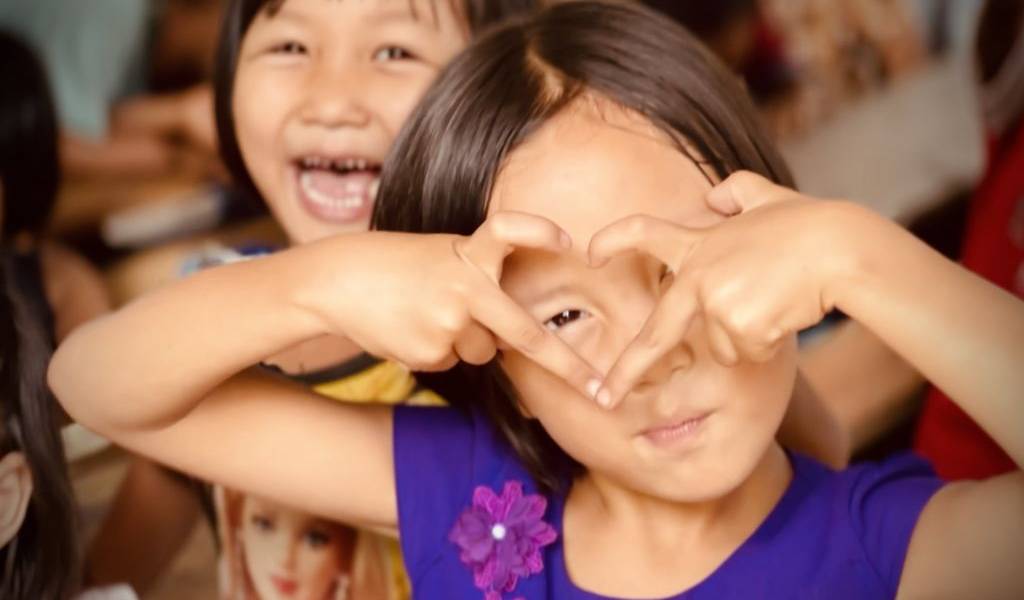
Our visit to several IDP camps was deeply distressing. You are immediately surrounded by dozens of children, as visitors are a welcome change from the otherwise bleak daily life in these camps. Many people also hope for help from outsiders, as survival is a constant struggle.
One of the biggest problems in Sudan is hunger. The Sudan hunger crisis is widely considered one of the worst in recent history due to its massive scale, severity, and impact. Around 20–25 million people – nearly half the country’s population – are facing acute food insecurity. Famine conditions already exist in parts of Darfur and many more areas are at risk.
The crisis has been driven largely by ongoing conflict, which has disrupted agriculture, displaced millions, and severely restricted humanitarian aid, making it the biggest hunger emergency in the world today.
Adults, and often children as well, spend their days from morning to evening searching for food, whether by gathering wild berries and fruits or trying to sell the little they have at the local market to earn a few pennies.
There is little to no access to schooling in the IDP camps. It felt like I was facing an entire lost generation. The crisis that hits these brave people will have long lasting consequences.
I was also struck by the many women, often alone, separated from their husbands or widowed, now fighting for their own survival and that of their children. Most do not know whether their husbands are still alive or where they are, as there is no way to stay in contact.
Looking back
It’s been about a month since I returned, and I’m writing this from the comfort and safety of my home. But one thing I don’t think I’ll ever forget is the emptiness in people’s eyes and their sorrowful, traumatised faces bearing a clear expression of resignation.
And worse of all, this was not only adults, but also children.
Witnessing such suffering is difficult. It also confronts us with the limits of what we can do. We cannot help everyone. We cannot fix everything.
And yet, what we can do matters.
Even small acts, like providing food for families, supporting children, or finally finding a doctor for someone with a hole in their foot from an AK47 bullet, can bring relief and restore dignity, even if only for a time and for one person.
What may seem small to us can mean everything to those receiving it.
But above all, I will remember the generosity of the local Nubans.
Even in the midst of all this hardship, I encountered something truly remarkable: extraordinary humanity.
Despite the scarcity, they share.
When families arrive after days without food, the people offer what little they have. This quiet, selfless compassion is deeply moving.
Hope in the midst of suffering
The trip, including visits to several IDP camps, lasted three days – days filled with images, impressions, and encounters. We were able to return safely. But I will never forget the people in the Nuba Mountains. They shared their stories with me, they gave me a glimpse into their lives. And I feel that through CSI I could provide some support to them, with the help of God and our donors.
The people there will remain with me, in my thoughts and prayers. I also feel a responsibility to do something for them. I do not want to simply go, witness their suffering, and then disappear again. These encounters have once again shown me how privileged my own life is, and how much more I can do.
Thank you to those of you who pray and donate to this brave people. Together we can make a difference, practicing our Christian solidarity with the forgotten people of this world, truly impacting their lives.
This journey reminded me of something crucial: Even in the midst of suffering, there is hope. Even in uncertainty, there is humanity.
This first-hand account was written by a CSI worker who wishes to remain anonymous. She visited the IDP camps in the Nuba Mountains in Sudan in February 2026, delivering food, utensils, medicines to the people in need, thanks to the kind donations made available to CSI.
If you would like to support this work, please pray for Sudan and donate today.
You can also check out the Hunger Relief campaign here.