Churches across Sri Lanka held memorial services on Easter Sunday to mark the seventh anniversary of the 2019 Easter bombings that killed at least 269 people and injured more than 500. Meanwhile, Christian survivors and families of victims continue to seek answers about who enabled the attacks, why warnings failed, and whether those responsible will face justice.
Bombings
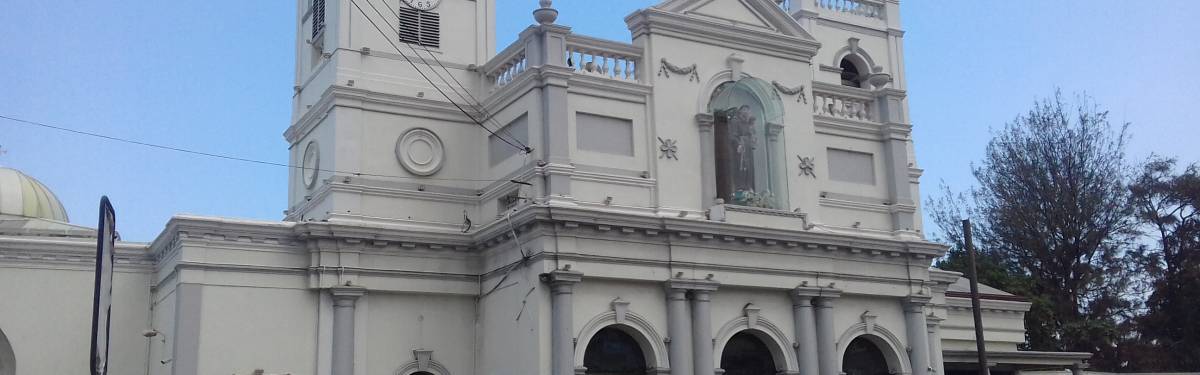
St. Sebastian’s Church in Negombo, about 25 miles north of the commercial capital city of Colombo and one of the three churches attacked on Easter on 21 April 2019, saw more than 100 worshipers killed and over 280 others injured.
The Catholic congregation “carries with it a deeply emotional history, particularly the events of the Easter Sunday Attack in 2019, where our community faced one of its greatest trials”, says the parish website. “In memory of those we lost, we continue our mission to strengthen our faith and to spread love and forgiveness.”
It adds, “Among those killed were entire families, young children in their Sunday best, elderly parishioners, and those who had come simply to celebrate life and renewal.”
Parishioners have been holding peaceful protests on the 21st of each month calling for truth and justice.
At St. Anthony’s Shrine in Colombo, a Catholic church, more than 40 people were killed when a bomb hit. At the Protestant evangelical Zion Church in Batticaloa, about 200 miles east of Colombo, at least 30 people lost their lives.
Three luxury hotels in Colombo were also targeted in the attacks. Around 45 of those killed were foreign nationals, most of them hotel guests.
Anger
Days after the coordinated attack, anger among survivors and victims’ relatives grew after information emerged that intelligence warnings had been received from the Indian authorities about an imminent attack. The warnings, including names, addresses and phone numbers of those involved, had failed to trigger action by security officials and the government of President Maithripala Sirisena.
Most official accounts in Sri Lanka have attributed the bombings to National Thowheeth Jama’ath, a local Islamist group, with links to or inspired by Islamic State.
However, the case has remained contested. Investigations and media reports have questioned whether the full chain of responsibility, including possible external support or facilitation, has been fully established.
Inaction
The trial of 25 people accused of masterminding the attacks opened in 2021, with 23,000 charges and a witness list so large that lawyers warned the case could run for years. Little progress was made in the investigation during the tenures of presidents Gotabaya Rajapaksa and Ranil Wickremesinghe until mid-2024.
In 2023, Sri Lanka’s Supreme Court ruled that former President Sirisena and four senior officials had failed to avert the bombings after warnings from Indian intelligence. The court ordered Sirisena to pay 100 million rupees (around $317,000) in compensation to relatives of victims who filed a civil case. The former police chief, two senior intelligence officers and the former defense secretary were ordered to pay a further 210 million rupees (roughly $670,000).
Also in 2023, a documentary by the UK broadcaster Channel 4 alleged that retired Major General Suresh Sallay, who was appointed head of the State Intelligence Service after Rajapaksa won the 2019 presidential election, had links to the bombers and had met them before the attacks. A whistleblower told the broadcaster that Sallay had allowed the bombings to proceed to influence the election in Rajapaksa’s favour.
Gotabaya Rajapaksa and his brother Mahinda Rajapaksa built a reputation as strong leaders following the military defeat of the separatist Liberation Tigers of Tamil Eelam in 2009. Both have also faced allegations of serious human rights violations and possible war crimes during the final phase of the conflict, which they have denied.
Slow progress
Some progress has been made in the investigation since President Anura Kumara Dissanayake took office on 23 September 2024, following his election earlier that month.
In February 2026, criminal investigators arrested Sallay in connection with the bombings, taking him into custody at dawn in a suburb of Colombo. He denies any involvement in the suicide attacks.
Father Cyril Gamini Fernando, spokesman for the Archdiocese of Colombo, called on 26 February for the investigation to proceed without political interference after Sallay’s arrest, according to media reports. Fernando was quoted as saying that the law should apply equally to politicians, military officers, business figures and everyone else.
Fernando added that the Catholic Church had consistently pressed for investigators to identify those responsible and bring them before the courts. He also said investigations had stalled under Rajapaksa and had failed to advance under Wickremesinghe, while the Criminal Investigation Department had been conducting a comprehensive and independent inquiry since November 2024.
“Heroes of faith”
In April 2025, the Vatican named the 167 Catholics who died in the bombings as “heroes of faith” at a sixth anniversary commemoration led by Cardinal Malcolm Ranjith, the Archbishop of Colombo.
For survivors and the families of the dead, time is marching on. Yet their demand has remained the same: truth about the attacks, accountability for those responsible, and justice delivered before another anniversary passes.
Legal pressure around the issue remains active. Christian social activist Shehan Malaka Gamage continues to face a case filed by the Attorney General’s Department under the previous government after he told a media briefing that the Easter attacks were part of a planned operation that contributed to former President Rajapaksa’s rise to power. His case was taken up on 19 January 2026, but was postponed to 27 April 2026.